Online MMA Training: How to Structure MMA Practice at Home
Aug 17, 2026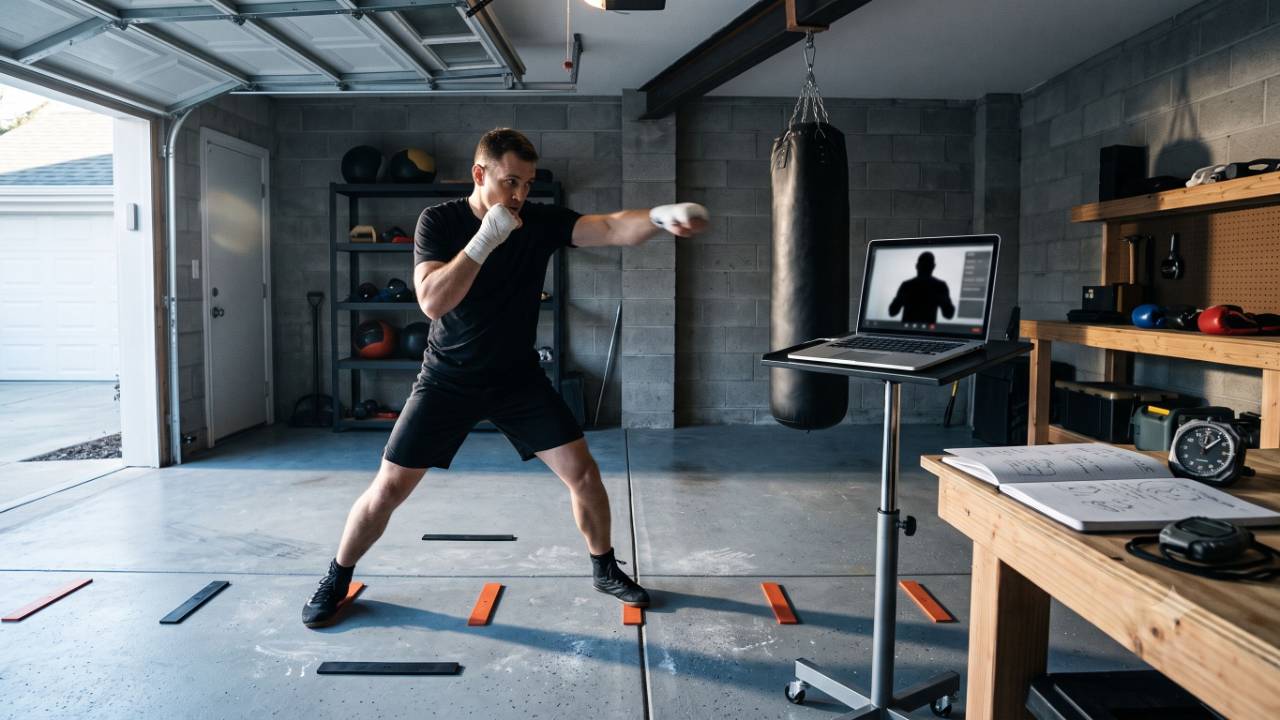
Online MMA Training: How to Structure MMA Practice at Home
Online MMA training works best when it has structure.
Watching random technique videos is not a training plan. Doing hard workouts is not the same as building MMA skill. If you want to improve at home, you need a clear way to organize your sessions, repeat the right drills, and track your progress over time.
A good online MMA training plan should help you train striking, wrestling, grappling movement, conditioning, and recovery in a way that makes sense for your current level.
You do not need every piece of gym equipment to get started. You do need focus, consistency, and a plan you can actually follow.
This guide shows online students how to structure MMA training at home so each session has a purpose.
Why structure matters in online MMA training
MMA has many moving parts.
You can train boxing, kickboxing, takedowns, defense, clinch work, ground movement, submissions, escapes, strength, conditioning, and mobility. Without structure, it is easy to jump from one topic to another and never build real skill.
Structure helps you answer three important questions:
- What am I training today?
- Why am I training it?
- How will I know if I am improving?
Online MMA training should not feel like guessing. A structured plan helps you focus on one skill at a time, repeat the basics, and build confidence through consistent practice.
Start with one clear training goal
Before each session, choose one main goal.
Do not try to improve everything in one workout. A better approach is to pick one focus area and build the session around it.
Examples of clear MMA training goals include:
- Improve stance and footwork
- Build cleaner jab and cross mechanics
- Practice defensive movement after striking
- Drill sprawls and takedown defense movement
- Improve hip escapes and ground movement
- Build fight-specific conditioning
- Review a lesson from your online MMA course
The goal should be specific enough that you know what to practice.
“Get better at MMA” is too broad.
“Practice moving after throwing a jab-cross” is clear and useful.
Use a simple four-part session format
A strong at-home MMA session does not need to be complicated.
Use the same basic structure each time so you can train with consistency.
1. Warm up and prepare your body
Spend 8 to 12 minutes getting ready to move.
A good MMA warm-up can include:
- Jumping jacks or light shadowboxing
- Neck, shoulder, hip, and ankle mobility
- Squats, lunges, and push-ups
- Hip escapes, technical stand-ups, and sprawls
- Light footwork in your stance
The goal is not to get exhausted. The goal is to prepare your joints, raise your heart rate, and get your body ready for skill work.
2. Learn or review one technique
Spend 15 to 25 minutes on one key lesson.
If you are following online MMA training, this is where you watch or review the lesson for the day. Keep the focus narrow. One technique or one small sequence is enough.
For example:
- Jab-cross with a step out
- Lead hook after the cross
- Sprawl to reset stance
- Shot entry footwork
- Hip escape to guard recovery
- Technical stand-up from the ground
Watch the lesson, pause it, practice slowly, then repeat. Do not rush through the technique just to finish the video. The goal is clean movement.
3. Drill the movement with repetition
Spend 15 to 25 minutes drilling.
This is where skill starts to develop. You are not just watching anymore. You are practicing the movement until it feels more natural.
Use slow reps first. Then build speed only when the mechanics are correct.
A simple drilling format:
- 3 rounds of 2 minutes at slow speed
- 3 rounds of 2 minutes at moderate speed
- 1 round of 2 minutes with realistic rhythm
Rest 30 to 60 seconds between rounds. Stay focused on form. If your technique breaks down, slow down again.
4. Finish with conditioning or mobility
Spend 10 to 20 minutes at the end of the session.
Some days can finish with conditioning. Other days should finish with mobility and recovery.
Conditioning options include:
- Shadowboxing intervals
- Sprawl intervals
- Bodyweight circuits
- Core work
- Footwork rounds
Mobility options include:
- Hip mobility
- Hamstring stretching
- Thoracic spine rotation
- Shoulder mobility
- Slow breathing to recover
Conditioning matters, but it should not replace skill training. If every online MMA session becomes a hard workout, your technique may stop improving.
Build a weekly online MMA training plan
A weekly plan helps you balance skill, conditioning, and recovery.
Here is a simple structure for online MMA students training at home three to five days per week.
| Day | Focus | Example Session |
|---|---|---|
| Monday | Striking | Footwork, jab-cross, shadowboxing rounds |
| Tuesday | Grappling movement | Hip escapes, bridges, technical stand-ups |
| Wednesday | Conditioning | MMA intervals, core work, mobility |
| Thursday | Wrestling movement | Stance, level change, shot entry, sprawls |
| Friday | Mixed skill review | Combine striking, defense, and movement |
| Saturday | Optional light session | Mobility, video review, easy shadowboxing |
| Sunday | Rest | Recovery and planning |
If you are new, start with three sessions per week. More training is not always better.
Consistent training that you can recover from is better than doing too much and stopping after two weeks.
How to train striking at home
Striking can be trained at home with shadowboxing, footwork drills, and technique rounds.
Focus on the basics first:
- Stance
- Guard position
- Balance
- Footwork
- Straight punches
- Defensive movement
- Returning to stance after each strike
A simple at-home striking session could look like this:
- 5 minutes of stance and footwork
- 3 rounds of jab-cross mechanics
- 3 rounds of jab-cross with a step out
- 2 rounds of defense after striking
- 2 rounds of light shadowboxing
If you have a heavy bag, use it carefully. Do not turn every round into power punching. Use the bag to check distance, timing, and technique.
If you do not have a bag, shadowboxing is still valuable when done with focus.
Good shadowboxing should not be random. Move like you are solving a problem: enter, strike, defend, angle out, and reset.
How to train grappling and wrestling movements at home
Grappling usually requires a partner for full training, but there is still a lot you can practice at home.
Solo grappling and wrestling movement helps build body awareness, coordination, and conditioning.
Useful at-home drills include:
- Hip escapes
- Bridges
- Technical stand-ups
- Level changes
- Penetration steps
- Sprawls
- Sit-outs
- Bear crawls
- Shrimping patterns
These movements matter because MMA is not only about strikes. You need to understand how to move on the ground, stand back up, defend takedown pressure, and return to a strong position.
A simple grappling movement session could include:
- 3 rounds of hip escapes
- 3 rounds of technical stand-ups
- 3 rounds of sprawls
- 3 rounds combining sprawl, stand-up, and stance reset
Keep the reps controlled. Smooth movement is more important than speed at first.
Add conditioning without replacing skill work
MMA conditioning should support your training. It should not take over your training.
If you are always exhausted, your technique will suffer. The best online MMA training plan includes conditioning at the right time and in the right amount.
A simple conditioning finisher:
- 30 seconds shadowboxing
- 30 seconds sprawls
- 30 seconds mountain climbers
- 30 seconds rest
- Repeat for 4 to 6 rounds
Another option:
- 3 minutes shadowboxing
- 1 minute rest
- 3 minutes footwork and defense
- 1 minute rest
- 3 minutes bodyweight circuit
Choose conditioning that matches MMA movement. You want to build endurance, balance, coordination, and the ability to recover between efforts.
Track progress with video and notes
Online students need feedback. If you do not have a coach watching you in person, video becomes an important tool.
Record short clips of your training once or twice per week. You do not need to film everything. Record one drill from the side and one from the front.
Look for simple details:
- Are your hands returning to guard?
- Are your feet crossing when they should not?
- Are you balanced after striking?
- Are you standing tall during level changes?
- Are your hip escapes creating real movement?
- Are you rushing the drill?
Keep a short training note after each session.
Write down:
- What you trained
- What felt better
- What needs work
- What lesson or drill to repeat next time
This keeps your online MMA training organized and helps you see progress over time.
Common mistakes to avoid
Training random techniques every day
Jumping between unrelated videos makes it hard to improve. Follow a plan and repeat core skills.
Going too fast too soon
Speed hides mistakes. Slow practice helps you learn the movement correctly.
Only doing conditioning
Fitness matters, but MMA is a skill-based sport. Make time for technique in every session.
Ignoring footwork and defense
Striking is not only punching and kicking. You need movement, balance, guard position, and exits.
Never reviewing your own training
Video review helps you catch mistakes you cannot feel while training.
Train with a system, not random workouts
The best online MMA training plan is simple, repeatable, and focused.
Start each session with one goal. Warm up properly. Study one technique. Drill it with control. Add conditioning when it fits. Track your progress and repeat the basics often.
That is how online students make steady progress at home.
The MMA Academy is built for students who want structured online MMA training instead of random workouts. Follow clear lessons, train with purpose, and build the skills you can keep improving over time.
Explore online MMA training with The MMA Academy.
JOIN NOW