Online MMA Training for Beginners: A Practical Checklist Before You Start
Aug 03, 2026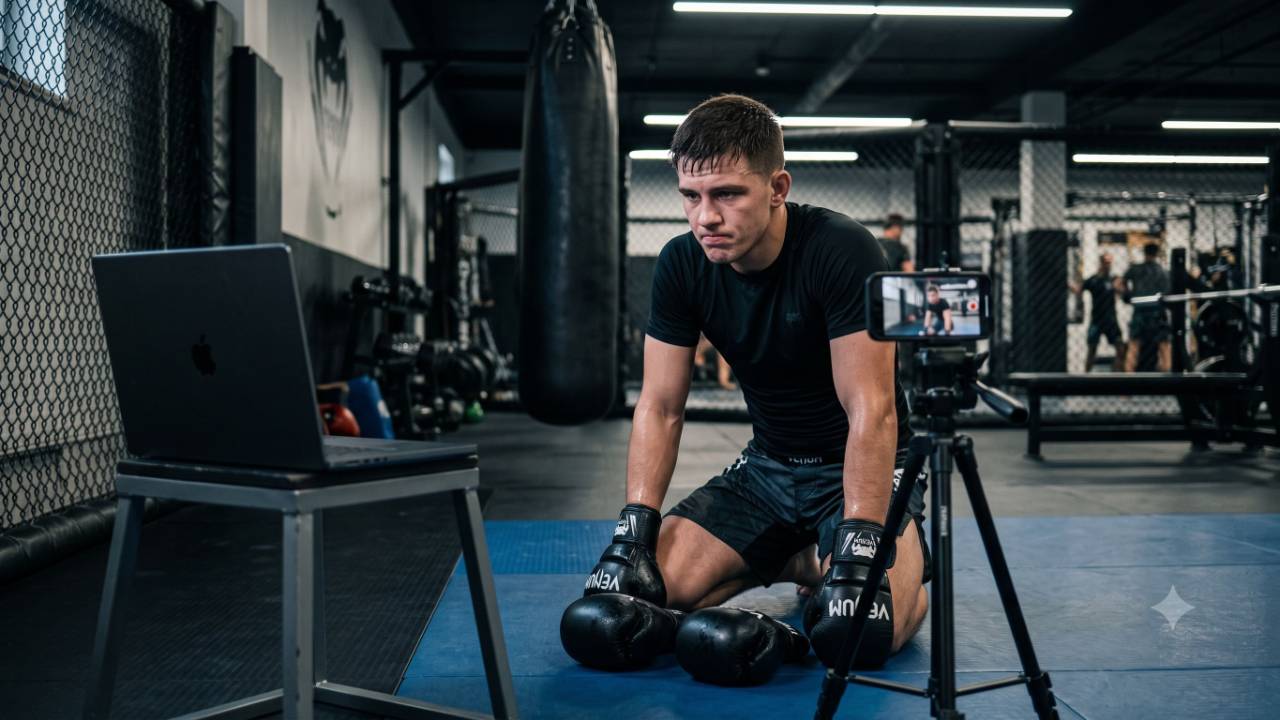
Online MMA Training for Beginners: A Practical Checklist Before You Start
Learning MMA online can work for complete beginners, but only if you approach it the right way.
MMA is not one skill. It is a mix of striking, wrestling, clinch work, takedowns, submissions, defense, conditioning, and decision-making. That can make online training feel overwhelming if you do not know where to begin.
The goal is not to copy advanced fighters or collect random techniques. The goal is to build a safe, simple foundation you can repeat.
This guide gives you a beginner checklist for learning MMA online with structure. Use it before you start, or use it to clean up your current training.
Can beginners really learn MMA online?
Yes, beginners can learn important parts of MMA online.
Online MMA training is useful for:
- Learning basic stance, footwork, and guard
- Understanding core strikes like the jab, cross, hook, and kick
- Practicing shadowboxing and movement drills
- Building MMA-specific fitness
- Studying takedown entries and defensive concepts
- Learning terminology before joining a gym
- Creating a simple home training habit
But online training has limits.
You cannot fully learn timing, pressure, sparring, live grappling, or real resistance without partners and coaching. MMA is an alive sport. At some point, you need feedback from real people.
That does not make online training pointless. It just means you should use it for the right job.
Think of online MMA training as your foundation builder. It can help you become more prepared, more coordinated, and more confident before you train in person.
The beginner mistake: learning random techniques
The biggest problem with learning MMA online is not a lack of information. It is too much information.
One video teaches a spinning kick. Another teaches a double-leg takedown. Another teaches an armbar. Another teaches cage wrestling. None of it connects.
For a beginner, that creates confusion.
Instead of asking, “What is the coolest technique I can learn today?” ask:
- What basic position am I improving?
- What movement pattern am I repeating?
- Can I explain when this skill is used?
- Can I practice it safely without a partner?
- Does it fit my current level?
Good beginner MMA training should feel almost boring at first. Stance. Balance. Guard. Footwork. Straight punches. Basic kicks. Hip movement. Getting up from the floor. Breathing under effort.
These basics are not separate from advanced MMA. They are what advanced MMA is built on.
Start with a clear training space
Before you train, set up a safe space.
You do not need a full gym at home. You do need enough room to move without hitting furniture, slipping, or landing on a hard object.
A simple home MMA training space should include:
- Enough floor room to step forward, backward, and side to side
- A non-slip surface
- Good lighting if you record yourself
- No sharp corners nearby
- Water close by
- A timer or phone app
- Optional mat space for mobility and ground movement
If you are practicing kicks, make sure the floor allows your support foot to turn. If your foot sticks while your hip rotates, your knee can take the stress.
If you are practicing ground movement, use mats if possible. If you do not have mats, stick to low-impact drills like technical stand-ups, hip escapes, and controlled bridges.
Do not practice takedown throws, submissions, or explosive falling drills alone on a hard floor.
Choose skills that match solo training
Not every MMA skill is good for solo online practice.
Some skills require a partner. Some require coach supervision. Some are safe to study online but not safe to drill hard alone.
Good beginner solo MMA skills include:
- Fighting stance
- Footwork
- Guard recovery
- Shadowboxing
- Basic punch mechanics
- Basic kick mechanics
- Sprawling mechanics without impact
- Technical stand-ups
- Hip escapes
- Bridges
- Core conditioning
- Mobility
- Breathing and pacing
Skills that need extra caution include:
- Live takedowns
- Submission finishes
- Neck cranks
- Heel hooks
- Hard bag work without technique
- Sparring imitation without defense
- High kicks before mobility is ready
- Explosive rolling or breakfall drills without instruction
A good rule for beginners:
If a mistake could hurt your neck, knee, shoulder, or training partner, do not learn it from video alone.
Study it, understand it, and save the hard drilling for supervised training.
Build your MMA foundation in layers
Beginners often try to learn striking, wrestling, and grappling all at once. That is normal, but it can slow progress.
A better approach is to train in layers.
Layer 1: Stance and movement
Your stance affects everything.
A beginner MMA stance should help you:
- Move in all directions
- Protect your head
- Defend takedowns
- Strike without losing balance
- Stay relaxed enough to breathe
Practice small steps first. Step forward, back, left, and right without crossing your feet. Keep your hands up. Keep your chin down. Return to your stance after every movement.
If your stance falls apart when you move, slow down.
Layer 2: Simple striking
Start with simple strikes before combinations.
Focus on:
- Jab
- Cross
- Lead hook
- Rear kick
- Lead kick
- Basic knee
Do not chase power at first. Chase balance.
After every strike, ask:
- Did my hands return to guard?
- Did I stay balanced?
- Did my feet move correctly?
- Could I defend after throwing?
In MMA, a strike is not finished when it lands. It is finished when you are back in position.
Layer 3: Defensive habits
Beginners love offense. Defense is what keeps training realistic.
Add defensive habits early:
- Hands return to guard after every punch
- Chin stays tucked
- Feet do not cross while moving
- Eyes stay forward
- You exit after combinations
- You practice resetting instead of admiring the strike
Even in solo training, defense matters.
Shadowboxing should not look like hitting air. It should look like fighting an opponent you respect.
Layer 4: Ground movement
You do not need to know every submission to start learning grappling.
Begin with movement:
- Hip escapes
- Bridges
- Technical stand-ups
- Base and posture
- Sitting through safely
- Moving from back to seated position
These drills teach your body how to create space, protect your position, and stand up safely.
For MMA, getting back to your feet is one of the most important beginner skills you can learn.
Layer 5: Conditioning that supports skill
MMA conditioning is not just getting tired.
Good conditioning helps you keep your technique when your heart rate rises.
For beginners, the best approach is short skill rounds with simple strength work.
Example beginner round:
- 1 minute shadowboxing
- 30 seconds technical stand-ups
- 30 seconds rest
- Repeat 4 to 6 times
Keep the pace controlled. If your form collapses, the round is too hard.
Conditioning should support skill, not destroy it.
Use video feedback to replace guesswork
One of the best tools for online MMA training is your phone camera.
You do not need to post your training online. You just need to see what you are actually doing.
Record short clips from the front and side. Watch for simple errors:
- Dropping hands after punches
- Standing too tall
- Crossing feet
- Leaning instead of stepping
- Losing balance after kicks
- Turning away during movement
- Holding your breath
- Rushing combinations
Keep clips short. Ten to thirty seconds is enough.
Pick one thing to fix at a time. Do not try to correct everything in one session.
A beginner who records and corrects one habit each week will usually improve faster than a beginner who watches ten new videos every day.
Follow a simple weekly structure
Beginners do not need a complicated MMA training plan.
A simple weekly structure might look like this:
Day 1: Striking basics
- Warm up with light movement
- Practice stance and footwork
- Drill jab and cross
- Add simple shadowboxing rounds
- Finish with stretching
Day 2: Ground movement and mobility
- Warm up hips, shoulders, and spine
- Practice hip escapes
- Practice bridges
- Practice technical stand-ups
- Finish with light core work
Day 3: Conditioning and review
- Shadowboxing intervals
- Bodyweight strength
- Footwork drills
- Record one short video
- Review one correction
This is enough for many beginners.
You can add more later, but your first goal is consistency. Three focused sessions per week will do more than seven random sessions you cannot maintain.
Know what progress should look like
Progress in online MMA training is not only about learning more techniques.
For beginners, progress looks like:
- Your stance feels more natural
- You can move without tripping over your feet
- You can punch without falling forward
- Your hands return to guard automatically
- You can shadowbox for a round without panicking
- You can get up from the ground more smoothly
- You understand basic MMA terms
- You feel less intimidated walking into a gym
These are real wins.
A beginner with balance, basic movement, and discipline is easier to coach than a beginner who knows fifty disconnected moves.
When to add in-person MMA training
Online training can help you start, but in-person training should be part of your long-term plan if you want to truly learn MMA.
Look for an MMA gym or coach when you are ready to work on:
- Pad holding and striking feedback
- Partner drilling
- Takedown timing
- Grappling resistance
- Controlled sparring
- Clinch work
- Defensive reactions
- Real pressure
You do not need to be fit before joining a gym. You do not need to be good before joining a gym.
But if online training helps you understand the basics, you may feel more comfortable taking that step.
Red flags in online MMA instruction
Not all online MMA content is beginner-friendly.
Be careful with instruction that:
- Promises fast mastery
- Skips safety details
- Teaches dangerous submissions to total beginners
- Focuses only on flashy knockouts
- Ignores defense
- Never explains common mistakes
- Has no structure or progression
- Encourages hard sparring without preparation
Good beginner instruction should be clear, repeatable, and honest about what can and cannot be learned alone.
MMA is complex. A trustworthy coach does not pretend otherwise.
The best way to start learning MMA online
If you are a complete beginner, start with the basics you can safely repeat.
Your first month should focus on:
- Stance
- Footwork
- Guard
- Straight punches
- Basic kicks
- Shadowboxing
- Ground movement
- Technical stand-ups
- Light conditioning
- Video review
Do not rush into advanced combinations. Do not judge your progress by how hard you can hit. Do not turn every session into a workout that leaves you exhausted.
Learn to move well first.
That is how online MMA training becomes useful instead of confusing.
Keep building your MMA foundation
The MMA Academy helps beginners train with more structure, better habits, and less guesswork.
Join the free email list for beginner-friendly MMA training tips, simple practice ideas, and guidance you can use whether you train at home, in a gym, or both.
Join the free MMA beginner email list