MMA Conditioning: How Fighters Build Strength, Cardio, and Endurance
Sep 19, 2026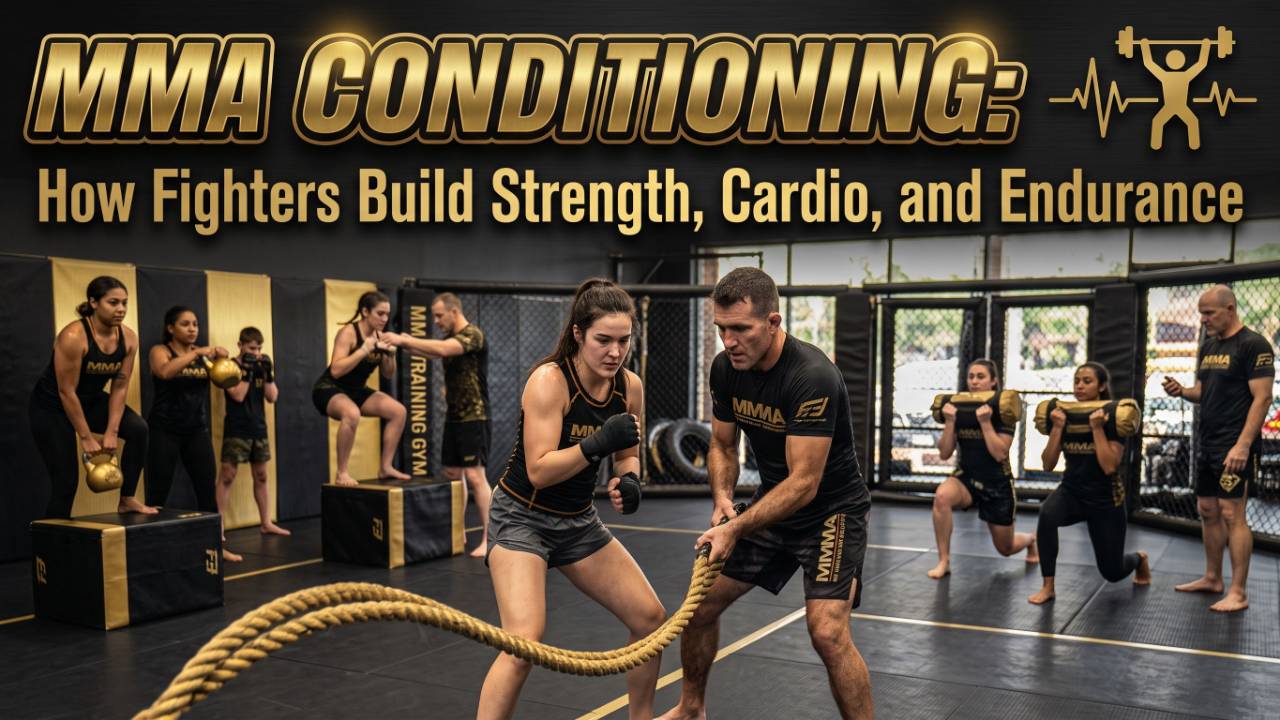
MMA Conditioning: How Fighters Build Strength, Cardio, and Endurance
MMA conditioning is not just about getting tired. It is about building the kind of fitness that helps you perform better during striking, wrestling, grappling, and live training.
A good MMA conditioning program improves strength, cardio, endurance, mobility, and recovery. More importantly, it supports skill. The goal is not to survive random hard workouts. The goal is to move better, stay composed, and perform longer.
What makes MMA conditioning different?
MMA places unique demands on the body.
A fighter may need to explode into a takedown, defend against pressure, strike at range, scramble on the ground, and recover quickly between exchanges. This requires more than steady-state cardio or basic weightlifting.
MMA conditioning must train:
- Aerobic endurance
- Anaerobic power
- Core strength
- Grip strength
- Hip mobility
- Rotational power
- Balance and coordination
- Recovery between bursts
- Mental toughness under fatigue
The best conditioning supports the techniques you are learning on the mat.
Cardio for MMA
MMA requires both long-duration endurance and short bursts of high output.
Aerobic conditioning
Aerobic work helps you recover between rounds, drills, and hard exchanges. It builds the base that allows you to train consistently.
Examples include:
- Light running
- Cycling
- Rowing
- Jump rope
- Longer technical drilling
- Moderate-paced circuits
This type of training should not destroy you. It should help build capacity.
Anaerobic conditioning
Anaerobic work helps with explosive efforts such as takedowns, flurries, scrambles, and clinch exchanges.
Examples include:
- Sprint intervals
- Heavy bag intervals
- Pad rounds
- Battle rope intervals
- Sled pushes
- Short, intense circuits
These sessions should be used carefully. Too much high-intensity work can hurt recovery and slow skill development.
Strength training for MMA
Strength matters in MMA, but it must be useful strength.
The goal is not only to lift more weight. The goal is to become stronger in positions used during martial arts.
Useful strength training includes:
- Squats and lunges for lower-body strength
- Deadlifts and hip hinges for posterior chain power
- Push-ups, presses, and rows for upper-body strength
- Pull-ups and carries for grip and back strength
- Rotational core work for striking and grappling
- Single-leg work for balance and takedown defense
MMA athletes need strength without losing mobility, speed, or conditioning.
Core training for MMA
The core connects the upper and lower body. It helps transfer power during strikes, maintain posture during grappling, and resist pressure in clinch or ground positions.
Effective core exercises include:
- Planks
- Side planks
- Dead bugs
- Pallof presses
- Medicine ball throws
- Hanging knee raises
- Farmer carries
- Turkish get-ups
A strong core helps you generate force and absorb pressure without breaking posture.
Grip strength and wrestling endurance
Anyone who has wrestled or grappled knows how quickly the hands, forearms, and shoulders can fatigue.
Grip strength matters for clinch control, takedowns, hand fighting, submissions, and defensive frames.
Ways to build grip endurance include:
- Towel pull-ups
- Farmer carries
- Gi or towel rows
- Dead hangs
- Rope climbs
- Kettlebell carries
- Controlled grappling rounds
Grip training should be balanced with recovery. Overworked forearms can affect striking and grappling performance.
Mobility and injury prevention
Conditioning is not complete without mobility.
MMA athletes need mobile hips, shoulders, ankles, and thoracic spine. Poor mobility can limit technique and increase injury risk.
Important areas to train include:
- Hip rotation
- Hamstring flexibility
- Ankle mobility
- Shoulder stability
- Neck strength
- Thoracic rotation
A smart warm-up and cooldown can make a major difference over time.
Sample beginner MMA conditioning workout
This sample workout can support MMA training without replacing technical classes.
Warm-up:
- 3 minutes jump rope
- 10 bodyweight squats
- 10 push-ups
- 10 reverse lunges
- 20 seconds plank
- 10 hip openers per side
Main circuit, 3 rounds:
- 30 seconds heavy bag punches or shadowboxing
- 10 kettlebell swings
- 10 push-ups
- 20 walking lunges
- 30 seconds mountain climbers
- 30 seconds rest
Finisher:
- 3 rounds of 20 seconds hard effort, 40 seconds easy effort on a bike, rower, jump rope, or heavy bag
Cooldown:
- Slow breathing
- Hip flexor stretch
- Hamstring stretch
- Shoulder mobility
If you are new to training, reduce rounds and intensity. Quality matters more than exhaustion.
Common MMA conditioning mistakes
Avoid these common mistakes:
- Going hard every day
- Skipping technique for workouts
- Ignoring recovery
- Training through injury
- Doing random circuits with no plan
- Lifting heavy without mobility work
- Confusing fatigue with progress
You should finish conditioning sessions better prepared for MMA, not too sore to train.
The best conditioning is consistent
MMA conditioning works best when it supports your training schedule. Strength, cardio, mobility, and recovery all matter.
At The MMA Academy, conditioning is connected to real martial arts performance. Students build fitness that helps them move, strike, grapple, and train with more confidence.
If you want to get in shape for MMA, start with structured coaching and consistent classes.
Click here: Start your free trial now