5 Striking Mistakes Beginners Make in MMA
Jul 31, 2026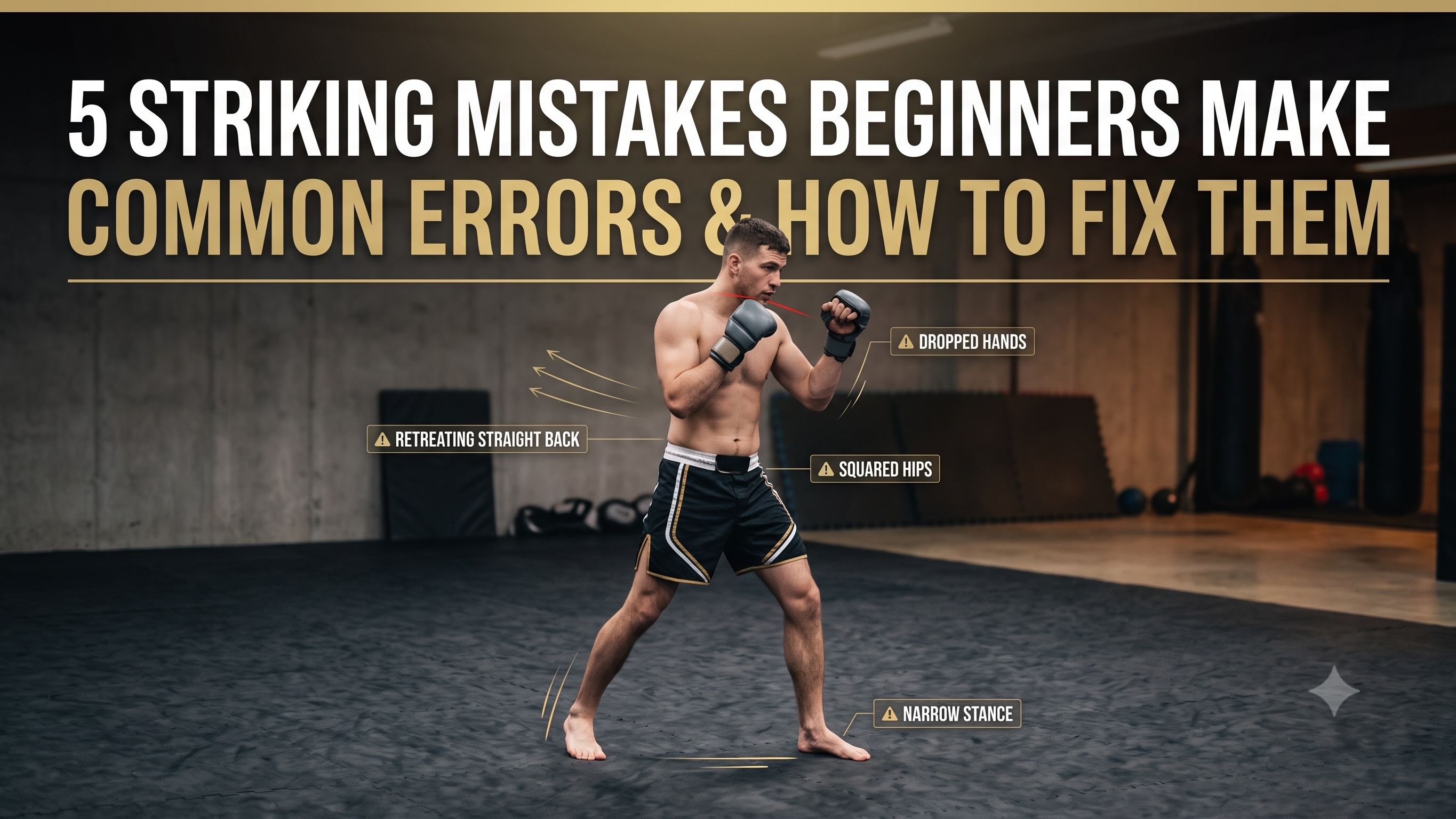
5 Striking Mistakes Beginners Make in MMA
Striking in MMA is not the same as striking in boxing, kickboxing, or Muay Thai on its own.
In MMA, every punch, kick, and knee has to account for takedowns, clinches, smaller gloves, cage pressure, and level changes. That is why beginners often struggle when they try to bring “regular” striking into an MMA setting.
The good news is that most beginner striking mistakes are fixable. You do not need flashy techniques. You need better habits, cleaner basics, and a stronger understanding of what makes MMA striking different.
Here are five common striking mistakes beginners make in MMA and how to start correcting them.
Mistake 1: Standing Too Tall
A tall, upright stance might feel comfortable, but it can create problems in MMA.
When you stand too tall, your legs are easier to attack, your hips are easier to reach, and your reactions to takedowns become slower. You may also find it harder to sit down on your punches or defend level changes.
In MMA, your stance needs to support both striking and wrestling. That does not mean you should crouch low the whole time. It means your knees should stay slightly bent, your hips should be ready to move, and your weight should allow you to strike, sprawl, or circle without resetting.
A better habit:
Stay balanced with your knees soft, chin tucked, and feet under you. After every strike, return to a stance where you can defend a takedown, check a kick, or move away from pressure.
Mistake 2: Throwing Single Shots Without a Plan
Many beginners throw one punch at a time, then stop and admire their work. In MMA, this creates openings.
Single shots can work, but they need purpose. If you throw a jab and leave your head in the middle, your opponent can counter, kick, clinch, or shoot underneath. If you throw a naked rear hand with no setup, you are easier to read.
Good MMA striking is not just about landing. It is about creating reactions.
A jab might set up a low kick. A feint might draw a level change. A body shot might bring the guard down. A punch combination might help you exit before your opponent can return fire.
A better habit:
Think in simple sequences. For example:
- Jab, cross, angle out.
- Jab, rear low kick, reset.
- Feint the jab, step back, counter.
- Cross, lead hook, sprawl-ready stance.
You do not need long combinations. You need combinations that have a clear beginning, middle, and exit.
Mistake 3: Forgetting About Takedowns While Striking
This is one of the biggest differences between MMA striking and pure striking sports.
In boxing or kickboxing, you can commit more heavily to certain punches or kicks because you do not have to defend a double leg. In MMA, overcommitting can put you directly into a takedown.
Common examples include:
- Leaning too far forward on punches.
- Throwing kicks with no setup.
- Crossing your feet when moving.
- Overextending your rear hand.
- Standing square after a combination.
If your striking leaves your hips exposed, a decent wrestler will notice.
A better habit:
After every combination, ask yourself: “Could I defend a shot from here?”
If the answer is no, adjust your stance, posture, and foot position. Keep your feet active, your hips back enough to react, and your head off the centerline when you strike.
Mistake 4: Dropping the Hands After Kicking
Kicks are powerful tools in MMA, but beginners often drop their hands when they throw them.
This usually happens because they are trying to balance. The problem is that small MMA gloves make counters easier to land. If your hands drop during a kick, your head becomes an easy target.
This is especially risky with naked low kicks or body kicks. If the kick is predictable, your opponent can step in with punches, catch the kick, or force you backward.
A better habit:
Keep your opposite hand high when you kick. Return your kicking leg to stance quickly. Do not admire the kick after it lands.
Also, set kicks up with punches, feints, or movement. A low kick after a jab is usually safer than a low kick thrown from too far away with no setup.
Mistake 5: Moving Straight Back Under Pressure
When beginners feel pressure, they often back straight up.
This is a problem in MMA because it can put you on the cage, limit your footwork, and make takedowns easier for your opponent. Moving straight back also keeps you on the line of attack, which means punches, kicks, and level changes can continue to follow you.
Good defensive movement is not just retreating. It is creating an angle.
A better habit:
When you are under pressure, practice exiting at an angle after your defense.
For example:
- Block, step out to your lead side.
- Slip, pivot, reset.
- Frame, circle off the cage.
- Jab while moving laterally.
The goal is not to run away. The goal is to avoid being trapped directly in front of your opponent.
How to Fix These Mistakes in Training
The best way to improve your MMA striking is to train with context.
Hitting pads is useful, but pads alone will not teach you how to strike when takedowns, counters, clinches, and cage pressure are involved. You need drills that connect striking to real MMA situations.
Try adding these habits to your training:
- Finish every combination in a balanced stance.
- Add a defensive reaction after each striking exchange.
- Practice striking into sprawls and sprawls back into striking.
- Set up kicks with punches or feints.
- Use light sparring to test distance, timing, and exits.
- Drill cage exits instead of only moving in open space.
Keep the intensity controlled. Beginners do not need gym wars. They need clean repetitions, good feedback, and enough resistance to understand what works.
Conclusion
Beginner MMA striking improves fastest when the basics are trained with the full sport in mind.
Stand in a way that lets you strike and defend takedowns. Throw combinations with a purpose. Protect yourself when kicking. Stop moving straight back. Build habits that work when the fight includes punches, kicks, clinches, wrestling, and cage pressure.
You do not need complicated techniques to become a better striker in MMA. You need simple skills performed consistently under realistic conditions.